Strategic Proposal: Dominate the Equine Feeder Market
1. The Competitive Advantage
The market leader currently dominates the rural market through volume, but their assortment is built on SlowFeeding 1.0—outdated designs that focus on storage rather than health and efficiency.
- The Opportunity:
By partnering with SlowFeeding 2.0, and leapfrog the competition. You aren’t just adding a product; you are making the competitor’s entire stock of models obsolete.
- The Result:
Our 25 years of Experience, Knowledge, and science-based R&D become your insurance policy for continued future success.
We don’t just offer a product; we offer a continuous innovation pipeline built around four unique principles with models tested and ready for mass production:
- The Stable Series: Physiologically correct solutions for individual stalls.
- The DIY Paddock Series: High-performance netting kits for custom-built paddock boxes.
- The Tub Series: Custom-fit solutions for Tarter Hay Baskets and future hardware standards.
- SlowGrazing: Our proprietary “reducer” technology—the first of its kind that horses actually like.
- And of course, we can produce any traditional size and model, like nets for Round Bale Feeders that reduce the wasting of hay by 50%. Traditional SlowFeeding nets also work for sheep, goats, and rabbits, but then only for waste reduction.
2. From Commodity to High-Margin Health Tech
Traditional hay nets are a $10 “commodity” with razor-thin margins.
- The Value Shift: SlowFeeding 2.0 is a Health Transformation System.
- The Work Shift: Stuffing hay nets has been a tedious punishment for caregivers, but all SlowFeeding 2.0 models are designed for “dump-in and go” filling that often don’t even have to be done every day to give the horse continuous access to his hay without overeating.
- The Image Shift: SlowFeeding 2.0 are status symbols that impress and signal that the owner really cares.
- The Math: We move the consumer from a low-cost, disposable item to a premium, science-backed solution. This justifies a higher price point, increases the Average Unit Retail (AUR), and provides Lowe’s with significantly better margins.
3. Solving the $4B EGUS Problem
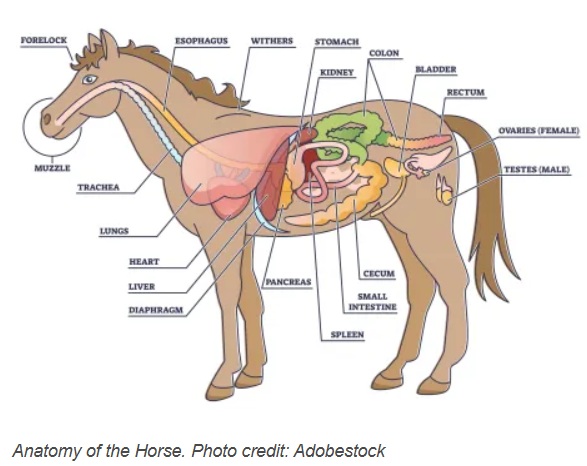
- Eating is the meaning of life for horses, and their digestive system is completely set up for slow grazing most hours during both day and night.
- It’s a long way from the mouth to the stomach, so it’s important that what they eat has been chewed thoroughly and mixed well with saliva before starting the long journey.
- The horse’s stomach can’t expand, so the flow in and out must be like steady streams.
- The production of stomach acid is continuous, which makes it essential that food passes through the stomach, bringing acid to the small intestine to keep the level constant in the stomach.
- If the acid reaches the upper part of the stomach walls that have no protective glands, which it does if passing food doesn’t bring acid out of there, ulcers are burned into the stomach wall.
- For performing horses, the situation is even worse since when they tighten the muscles around the stomach, compressing the stomach, acid reaches even the top part of the stomach, creating ulcers. The only relief they can get is when the stomach acid is mixed with well-chewed hay so that the acid is diluted and no longer as corrosive.
- The food can stay in the stomach for as little as 15 minutes, and the small intestine is both narrow and long, so the flow of food must be even and quite slow.
- At the end of the small intestine, there is a T-connection where both the cecum and the colon are connected. The “thunder” you can hear from the horse’s stomach is when the cecum sucks in food from the small intestine and pushes it out to the colon. This is done to add fermentation bacteria, that is stored in the cecum, to the food mixture.
- In the colon, the food mixture ferments for up to 45 hours, and this process promotes the growth of microorganisms that create protein and vitamins. For this process to last for long enough, the feed must contain lots of coarse fibers like cellulose (that’s why your horse eats fence poles) if he doesn’t have continuous access to roughage. Horses on continuous SlowFeeding don’t eat fence poles.
Equine Gastric Ulcer Syndrome (EGUS) affects 60% of all domestic and 90% of performing horses. It is a mechanical problem, not a biological one, so why try to manipulate a working system with pharmaceutical drugs?
- The Cause: The starvation periods traditional feeding create leaves the stomach empty, allowing continuous acid production to burn the upper stomach lining.
- The Solution: Our system ensures continuous, physiologically correct fiber flow. We treat the cause (feeding routine) so the customer doesn’t have to treat the symptom (expensive pharmaceutical drugs).
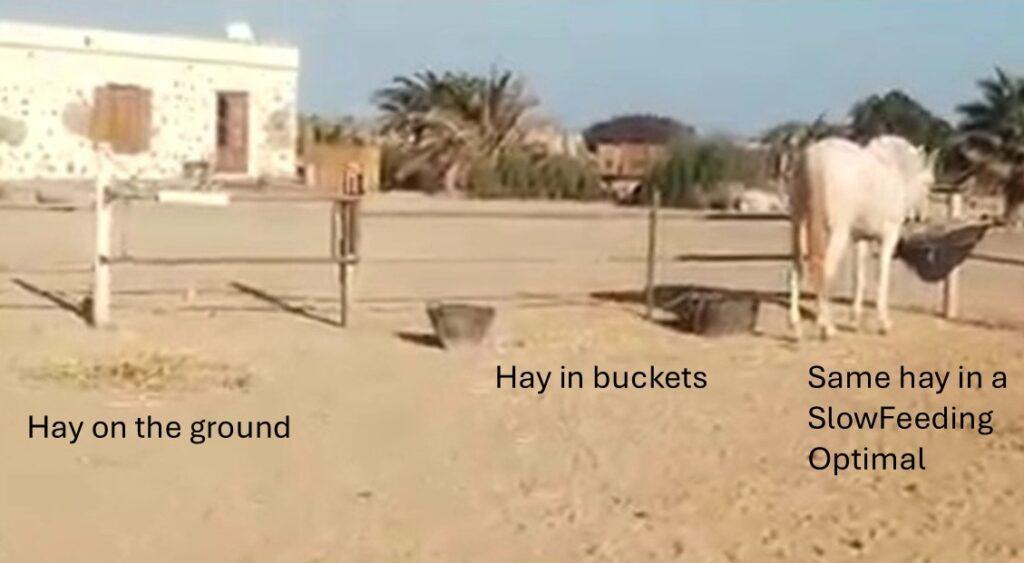
- Horse Preference: In head-to-head trials, horses prefer the SlowFeeding 2.0 interface over eating loose hay from the ground. We have the data to explain why.
4. Operational Excellence & “Made in USA”
We don’t just design; we create with an efficiency that shocked Beijing.
- The Secret Manufacturing: Our Swedish and Czech operations proved that organization and trust can beat low-cost labor in industrial handicraft.
- Factory #3 (Starbase, TX): We plan to scale in the US with 100 sewing machine operators.
- The Social Innovation: By utilizing a 2-shift, 5-hour model, we tap into an elite workforce—spouses of SpaceX engineers (“Family Managers”) who need prestige, non-technical careers. This ensures a stable, high-quality, and proud US-based supply chain.
5. Implementation & Knowledge Transfer
- The Advantage:
– Creating a SlowFeeding 2.0 space in the store makes the customer feel that you are a part of the future.
– We provide the “knowledge bank” that will transform your sales personnel into consultants, capable of explaining the physiology of the horse. This puts you in a completely different category than a standard hardware store.